





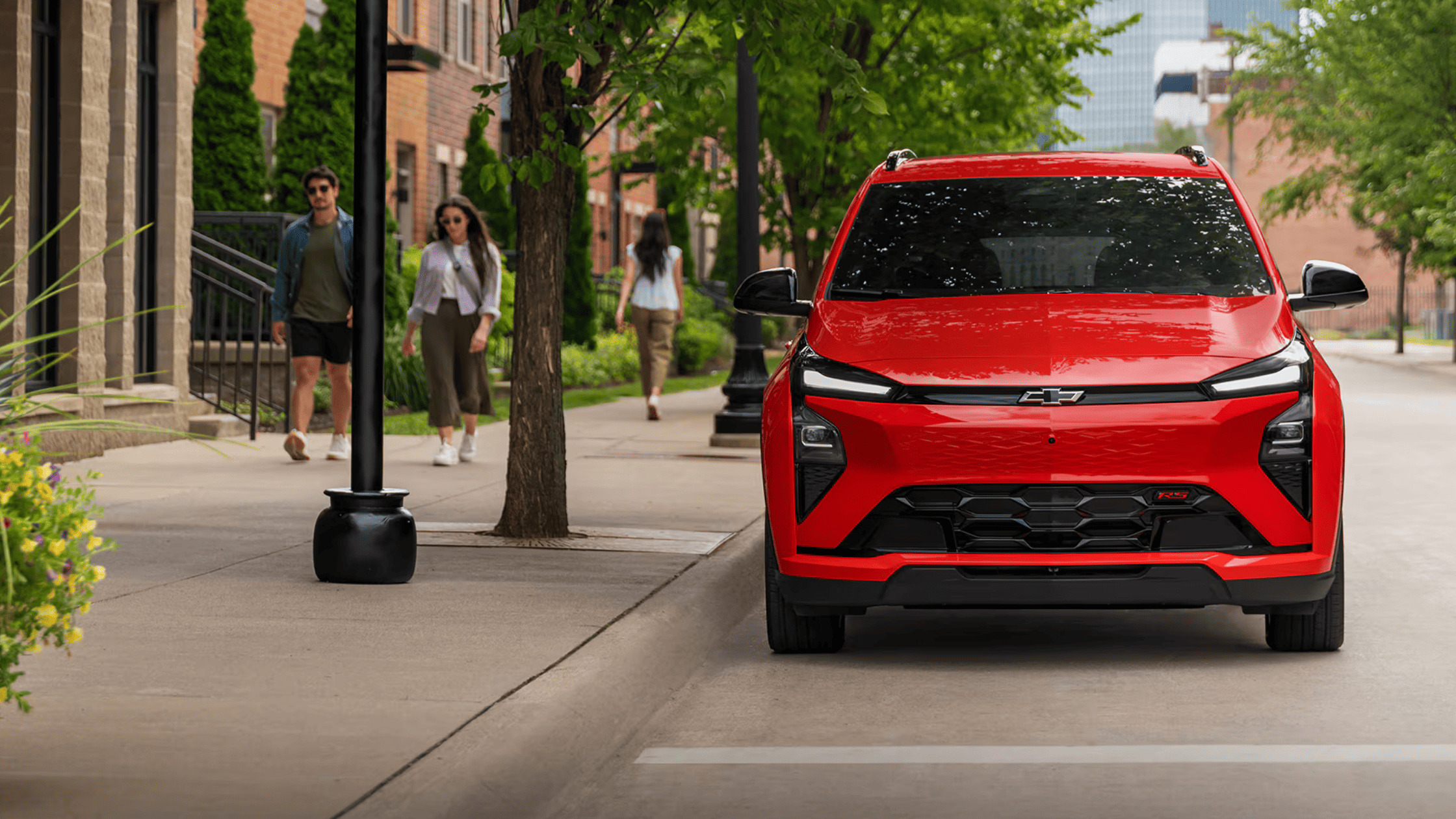
2027 Chevrolet Bolt near Morganton, NC
The 2027 Chevrolet Bolt returns as a compact battery electric hatchback designed to support daily transportation through efficient power delivery, updated charging architecture, and integrated digital systems. This model continues the Bolt nameplate with a focus on controlled energy use, consistent range output, and simplified mechanical layout. Engineering decisions across propulsion, battery design, and software integration emphasize predictability and functional efficiency rather than complexity. The vehicle architecture reflects General Motors’ approach to scalable electric platforms developed for mass deployment. Every component contributes to a balanced electric vehicle intended for routine operation across urban and highway environments.
Driver Interface and Integrated Digital Displays
The interior interface of the 2027 Chevrolet Bolt centers on a dual-screen digital layout designed to consolidate vehicle data and infotainment controls. An 11.3-inch center touchscreen manages navigation, media, and system settings. An 11-inch driver information display presents configurable driving data, including speed, energy usage, and range estimates. Both displays are positioned to reduce visual distraction while maintaining clear information access.
The infotainment system operates using Google built-in functionality, allowing native access to navigation, media applications, and system controls without external device dependency. Navigation software integrates vehicle range data and charging requirements into route planning. When DC fast charging is included along a route, the system initiates battery conditioning in preparation for higher charging rates. Voice command functionality allows control of climate settings, media selection, and communication features.

Cabin Layout and Functional Interior Design
Interior design prioritizes space efficiency and accessibility. A column-mounted gear selector creates additional open storage space between the front seats. Storage compartments beneath the instrument panel and within the center console provide practical locations for personal items. Physical controls remain integrated for frequently used functions such as climate adjustment and audio volume to ensure immediate access without reliance on touchscreen input.
Seating layout supports five occupants with a total passenger volume of 96.6 cubic feet. Rear seating folds flat to expand cargo capacity to 56.3 cubic feet, while cargo space behind the rear seats measures 16.2 cubic feet. Interior dimensions provide balanced headroom, legroom, and shoulder room for both seating rows. Available interior features include heated and ventilated front seating surfaces, a heated steering wheel, and wireless device charging.

Electric Drive System and Output Characteristics
The 2027 Chevrolet Bolt uses a single-motor electric drive configuration paired with a fixed gearset. The permanent magnetic drive motor produces 210 horsepower and 169 lb-ft of torque. Power is transmitted through an 11.59:1 final drive ratio, which supports smooth acceleration and controlled energy transfer across a wide speed range. The electric drive unit is internally developed and incorporates segmented magnet construction to limit heat accumulation during sustained operation. Silicon carbide inverter materials reduce electrical resistance between the battery and the motor, supporting improved efficiency under varying load conditions.
Energy recovery is managed through a blended regenerative braking system that operates during deceleration. Regenerative braking remains active independent of drive mode selection, allowing energy recapture without requiring one-pedal driving engagement. Brake pedal calibration maintains consistent resistance during transitions between regenerative and friction braking. This configuration supports predictable braking behavior while increasing overall system efficiency during stop-and-go operation.
Battery Architecture and Thermal Regulation Systems
Energy storage is handled by a lithium iron phosphate battery with a rated capacity of 65 kWh. This chemistry supports thermal stability and consistent performance across repeated charge cycles. The battery system is designed to deliver an EPA-estimated driving range of 262 miles on a full charge. This range output aligns with typical daily driving patterns and supports extended operation between charging sessions.
Thermal regulation is managed through a heat pump-based HVAC system that supports both cabin conditioning and battery temperature management. The system recovers thermal energy during operation to reduce electrical load on the battery. Active heating and cooling functions stabilize battery temperature during charging and driving, contributing to consistent range output across seasonal temperature variations. The HVAC system operates in coordination with charging functions to condition the battery when high-capacity charging is anticipated.
Disclaimer: On a full charge. Actual range may vary based on several factors, including ambient temperature, terrain, battery age and condition, loading, and how you use and maintain your vehicle.
Charging Infrastructure and Energy Transfer Capabilities
The 2027 Chevrolet Bolt introduces a native North American Charging Standard charging port. This integration expands access to compatible public charging infrastructure without the need for adapters. DC fast charging capability supports rates up to 150 kW, enabling battery charging from 10 percent to 80 percent in approximately 25 minutes under optimal conditions. This charging rate represents a substantial improvement over earlier Bolt configurations and reduces downtime during extended travel.
Alternating current charging capability reaches up to 11.5 kW when connected to compatible Level 2 equipment. At this rate, the vehicle can recover approximately 40 miles of driving range per hour of charging. The system also supports lower-capacity 120V and 240V charging sources, allowing flexible charging configurations based on available infrastructure. Charging behavior adapts to battery temperature and state of charge to manage energy flow efficiently.
Bidirectional charging capability enables vehicle-to-home energy transfer when paired with compatible home energy equipment. This function allows the vehicle battery to supply power to a properly equipped residence during grid interruptions, extending the functional use of stored energy beyond transportation.
Disclaimer: Actual charge times will vary based on battery starting state of charge, battery condition, output of charger, vehicle settings and battery temperature. See the Owner’s Manuals for your vehicle and charger for additional details and limitations.
Exterior Structure and Dimensional Profile
The exterior form of the 2027 Chevrolet Bolt maintains a compact hatchback profile optimized for aerodynamics and interior volume. Overall length measures 169.6 inches, supported by a 105.3-inch wheelbase. Vehicle width measures 69.7 inches without mirrors and 80.1 inches with mirrors extended. Overall height reaches 63.9 inches, contributing to a balanced center of gravity and upright seating position.
Ground clearance measures 5.6 inches, suitable for urban road conditions. A turning circle of 37.7 feet supports maneuverability in confined spaces. Seventeen-inch aluminum wheels are standard, paired with 215/50R17 all-season tires selected for efficiency and traction consistency. Exterior styling includes multiple paint options and trim-specific design elements that do not alter aerodynamic or dimensional characteristics.
Chassis Configuration and Driving Dynamics
The chassis system uses an independent MacPherson® strut front suspension paired with a compound crank torsion beam rear suspension. This layout balances ride stability with packaging efficiency. Steering is provided by column-mounted electric power steering with a 16.7:1 ratio, delivering consistent feedback across speed ranges.
Braking is managed through four-wheel disc brakes with anti-lock braking functionality and electro-hydraulic actuation. Front rotors measure 11 inches with vented construction, while rear rotors measure 10 inches with solid construction. Partial regenerative braking is integrated into the braking system to recover energy during deceleration while preserving consistent stopping behavior.
Driver Assistance and Safety System Integration
The 2027 Chevrolet Bolt includes an extensive suite of standard driver assistance technologies designed to support situational awareness and collision mitigation. These systems include adaptive cruise control, lane keep assist with lane departure warning, front pedestrian braking, side bicyclist alert, intersection automatic emergency braking, blind zone steering assist, and automatic high beam control. A rear seat reminder system and safety alert seat provide additional awareness cues.
Available technology enhancements include surround-view camera systems, traffic sign recognition, and an interior rear camera mirror. Hands-free driving capability is available through an advanced driver assistance system designed for compatible roadway environments. System operation integrates with navigation data to indicate supported driving segments and provide lane-level guidance during transitions.
Visit Elevation Chevrolet GMC for a Test Ride
Drivers interested in evaluating the technical operation of the 2027 Chevrolet Bolt can schedule a test drive through Elevation Chevrolet GMC near Morganton, NC. A hands-on drive allows direct assessment of electric motor response, regenerative braking behavior, and digital interface clarity under normal driving conditions. The test experience provides an opportunity to observe charging system operation, cabin ergonomics, and driver assistance features in use. Vehicle specialists are available to explain system functions, charging requirements, and energy management characteristics without pressure or obligation. Scheduling a test drive supports informed evaluation of how the engineering of the 2027 Chevrolet Bolt aligns with daily transportation needs.