




2026 GMC Terrain in Boone, NC
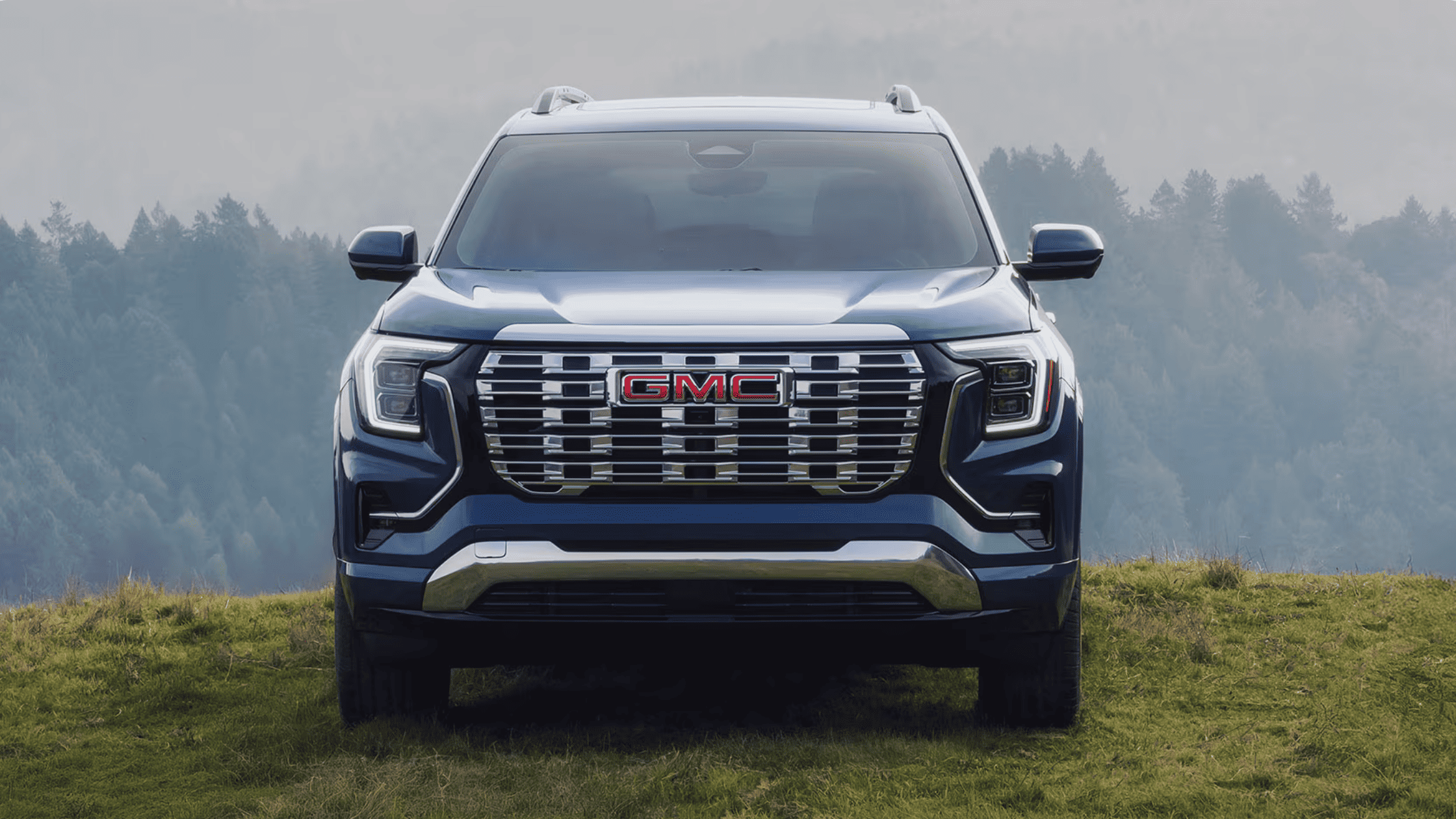
The 2026 GMC Terrain represents a compact sport utility vehicle engineered with a focus on balanced performance, efficient power delivery, and structural precision. The model introduces expanded trim availability with the addition of AT4 and Denali variants, providing different suspension configurations and capability features within the lineup. These additions expand the 2026 GMC Terrain platform while maintaining the same core mechanical architecture. The vehicle continues to use a turbocharged four-cylinder engine paired with either front-wheel-drive or all-wheel-drive configurations.
The design approach emphasizes mechanical efficiency and functional engineering. Engine construction, suspension geometry, drivetrain systems, and structural dimensions all contribute to the 2026 GMC Terrain’s capability as a compact utility vehicle. Exterior measurements provide maneuverability, while interior packaging supports passenger comfort and cargo capacity. The platform integrates specific drivetrain and chassis technologies intended to provide consistent handling, efficient fuel consumption, and stable ride characteristics across various driving conditions.
Interior Dimensions and Passenger Accommodation
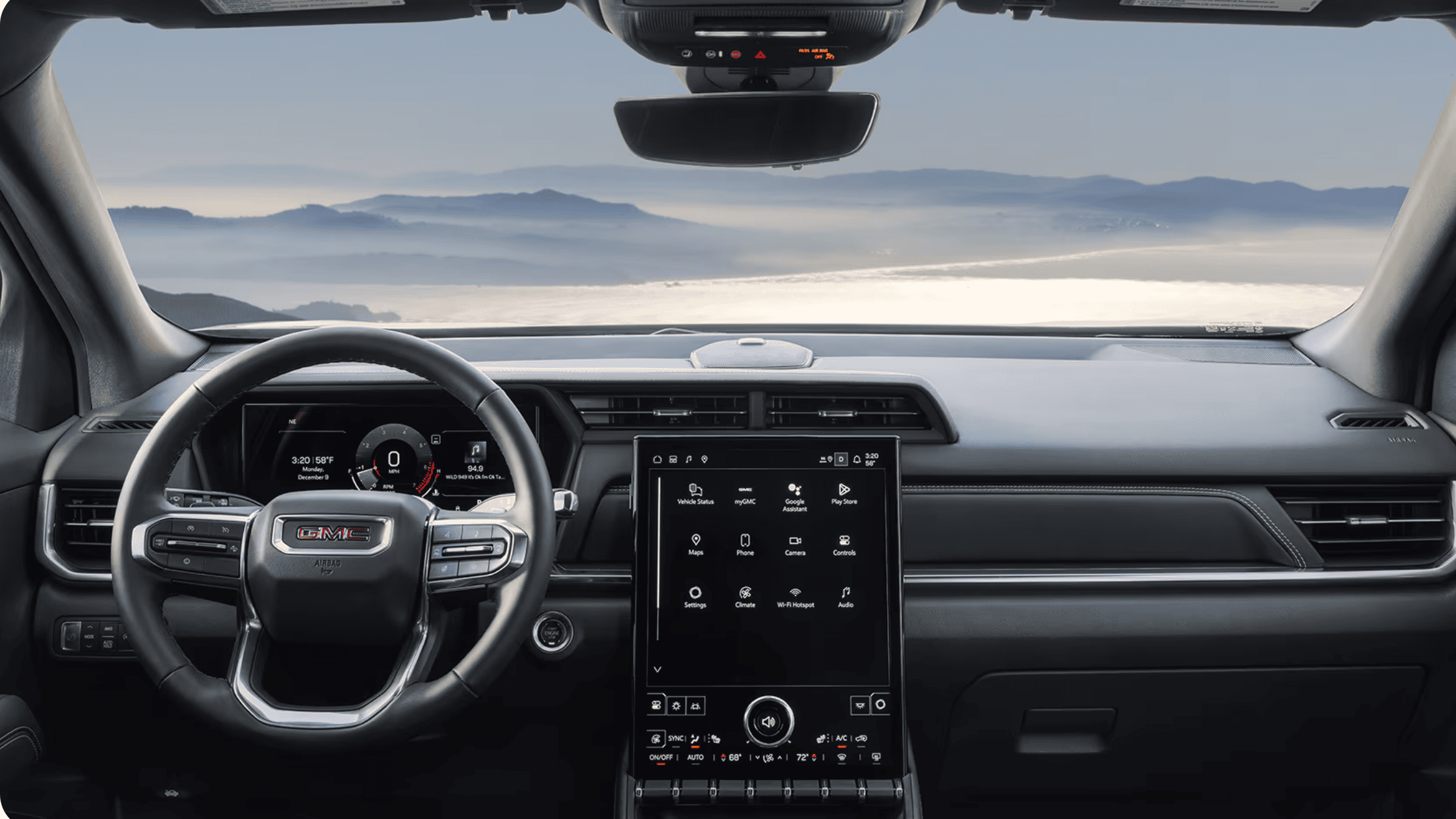
Interior measurements of the 2026 GMC Terrain support seating for five occupants with a two-front-seat and three-rear-seat configuration. Cabin design focuses on maximizing usable interior volume within the compact exterior footprint.
Front-row headroom measures 40.0 inches without a sunroof. With a sunroof installed, headroom measures approximately 38.2 inches. Second-row headroom measures approximately 39.2 inches without a sunroof and 37.8 inches with a sunroof.
Front row legroom measures 40.6 inches, while second row legroom measures 39.2 inches. These dimensions allow adequate seating space for both front and rear passengers.
Shoulder room in the front row measures 57.7 inches, while rear shoulder room measures 55.7 inches. Hip room measures 55.2 inches in the front row and 50.8 inches in the rear row.
The cabin structure supports comfortable seating distribution while maintaining space efficiency. Interior packaging design allows passengers to travel with sufficient leg and shoulder space across both seating rows.
Wheels, Tires, and Handling Characteristics
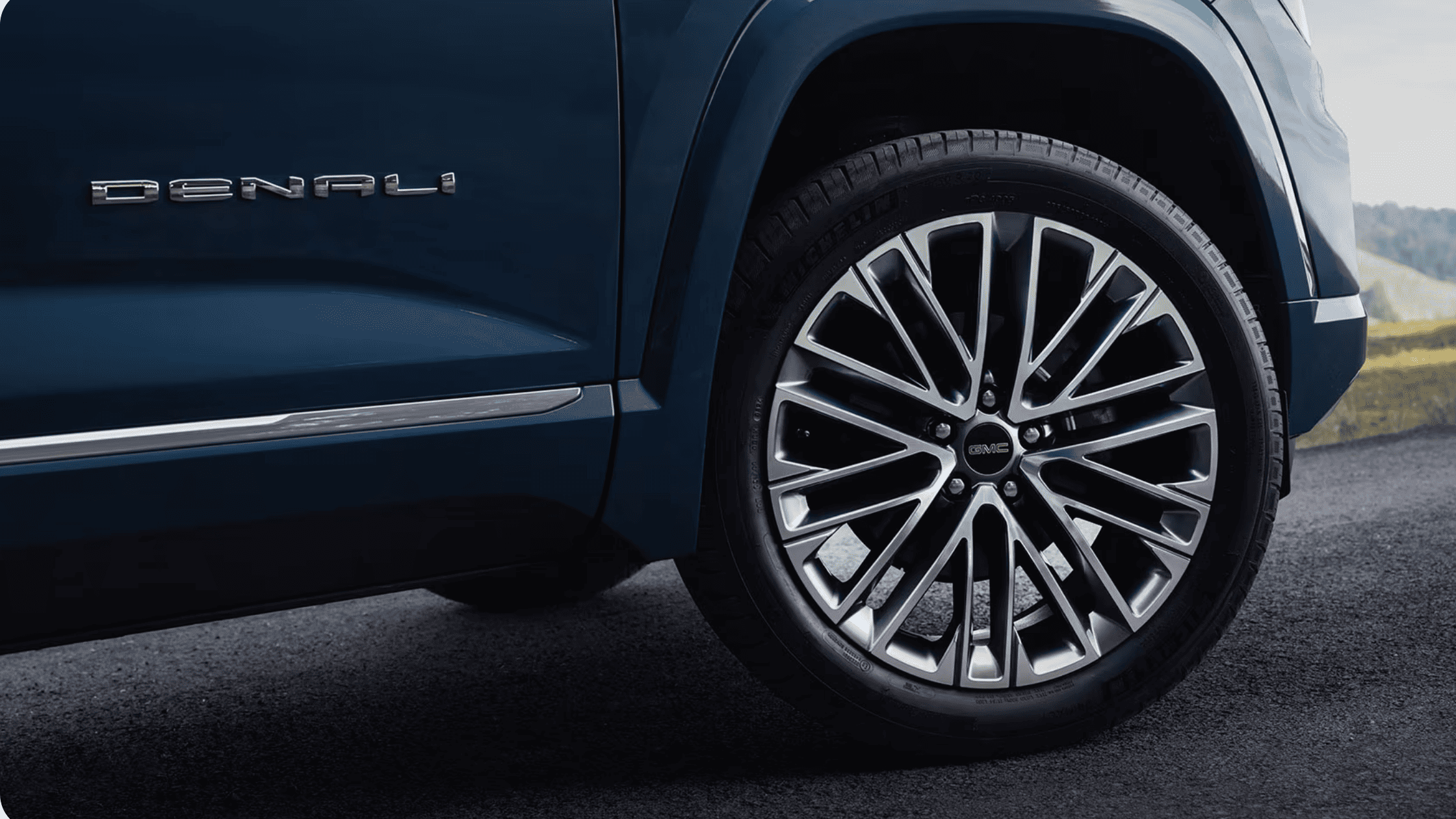
Wheel and tire configurations vary between trim levels within the 2026 GMC Terrain lineup. Elevation and AT4 models include standard 17-inch wheel assemblies. Tire options include configurations designed for standard road use as well as all-terrain conditions, depending on the selected trim.
Optional 19-inch wheels are available with the Elevation Premium Package and are standard on Denali models. A 19-inch black wheel design is also available within the Elevation lineup. Denali models also offer 20-inch wheel configurations.
Wheel diameter and tire size influence ride quality, road contact, and steering response. Larger wheel sizes can contribute to improved handling characteristics by increasing tire contact area with the road surface.
Turbocharged Engine Architecture and Mechanical Specifications
The 2026 GMC Terrain operates with a 1.5-liter turbocharged four-cylinder engine designed to deliver balanced power output and efficient operation. The engine uses a cast aluminum block and cast aluminum cylinder head. Aluminum construction helps manage engine weight and thermal efficiency while maintaining structural durability under varying operating conditions.
The engine utilizes a dual overhead camshaft configuration with four valves per cylinder. This valvetrain design allows precise control of intake and exhaust flow. Direct fuel injection supports optimized combustion efficiency by delivering fuel directly into the combustion chamber at controlled pressure levels. The turbocharging system increases intake air pressure to improve power output without increasing engine displacement.
The engine bore and stroke measure 2.9 inches by 3.4 inches, equivalent to 74.0 millimeters by 86.6 millimeters. This configuration contributes to balanced torque delivery and stable engine operation across the rpm range.
Power output varies slightly based on drivetrain configuration. Front-wheel drive models generate 175 horsepower at 5600 rpm. All-wheel drive models produce 175 horsepower at 5800 rpm. Torque delivery differs between configurations. Front-wheel drive models produce 184 pound-feet of torque within a range of 1750 to 4800 rpm. All-wheel-drive models deliver 203 pound-feet of torque within a range of 2000 to 4000 rpm.
Transmission Systems and Drivetrain Operation
The 2026 GMC Terrain uses two transmission systems depending on the selected drivetrain. Front-wheel drive configurations utilize a continuously variable transmission. A CVT adjusts gear ratios automatically using a belt and pulley system rather than fixed gear steps. This allows the engine to operate within its most efficient RPM range during acceleration and cruising conditions.
All-wheel drive configurations use an eight-speed automatic transmission paired with a 3.47 axle ratio. The automatic transmission shifts between defined gear ratios to balance power delivery and fuel efficiency. The eight-speed design provides a wider ratio spread than traditional transmissions with fewer gears. This allows improved torque multiplication during acceleration while maintaining efficient engine speeds during highway travel.
The drivetrain architecture allows drivers to select between front-wheel drive efficiency or additional traction with all-wheel drive capability. The drivetrain components integrate with electronic traction control systems to help maintain stability in varying road conditions.
Fuel Efficiency and Operational Range
Fuel economy remains an important specification within the 2026 GMC Terrain platform. The turbocharged engine and transmission systems contribute to the vehicle’s efficiency ratings across multiple drivetrain configurations.
Front-wheel-drive elevation models achieve an EPA-estimated 26 miles per gallon in city driving and 28 miles per gallon on the highway, resulting in a combined estimate of 27 miles per gallon. All-wheel drive Elevation models produce an EPA estimate of 24 miles per gallon in city conditions and 28 miles per gallon on the highway for a combined rating of 25 miles per gallon.
The AT4 and Denali all-wheel drive models achieve an EPA estimate of 24 miles per gallon in city driving and 26 miles per gallon on the highway, producing a combined estimate of 25 miles per gallon.
Fuel tank capacity differs based on drivetrain configuration. Front-wheel drive models have a fuel capacity of approximately 14.8 gallons. All-wheel drive models provide a slightly larger capacity of approximately 15.6 gallons. These specifications support extended driving distances between refueling intervals depending on driving conditions.
Disclaimer: *EPA est. MPG city/hwy/combined: FWD 26/28/27 AWD 24/28/25.
Suspension Systems and Chassis Engineering
Chassis engineering in the 2026 GMC Terrain incorporates independent suspension systems and electronically assisted steering technology. The vehicle uses a four-link independent rear suspension design that allows each wheel to move independently in response to road surfaces. Independent suspension contributes to improved ride quality and more stable handling during cornering and on uneven road conditions.
Front suspension design varies depending on trim configuration. Elevation models use a MacPherson® strut front suspension system. This design combines a shock absorber and coil spring assembly into a single unit while maintaining structural simplicity and reliability.
AT4 models use a MacPherson® strut suspension system equipped with hydraulic rebound stops. Hydraulic rebound stops help control suspension movement when the suspension extends after compression. This technology reduces impact forces transmitted through the chassis during rough surface driving.
Denali models incorporate MacPherson® strut suspension with smart frequency damper technology. Frequency-selective damping systems adjust suspension response based on the frequency of suspension movement.
The steering system uses dual pinion rack electric power steering. Electric power steering reduces mechanical load on the engine while providing consistent steering assistance. The system also allows integration with electronic vehicle stability systems.
The braking system uses four-wheel disc brakes equipped with E-boost anti-lock braking and electronic stability control. Front brake rotors measure 300 millimeters by 26 millimeters and use a vented design to assist heat dissipation. Rear brake rotors measure 288 millimeters by 12 millimeters and use a solid rotor configuration.
Exterior Dimensions and Structural Measurements
Exterior measurements of the 2026 GMC Terrain reflect the vehicle’s compact sport utility vehicle classification. The wheelbase measures 107.48 inches or 2730 millimeters across all trim configurations. Wheelbase length contributes to interior packaging and ride stability.
Overall vehicle length varies slightly depending on trim level. Elevation models measure approximately 181.0 inches. AT4 models measure approximately 181.4 inches. Denali models measure approximately 181.1 inches.
Vehicle width measures 74.5 inches across all configurations. Overall height measures approximately 66.1 inches for the Elevation and Denali models. AT4 models measure approximately 66.5 inches due to suspension and structural differences.
Front track width measures 63.8 inches, and rear track width measures 63.9 inches. Track width affects vehicle stability and handling characteristics during cornering.
Ground clearance varies between trims. Elevation and Denali models provide approximately 7.7 inches of ground clearance. AT4 models increase ground clearance slightly to approximately 7.9 inches to support off-road driving conditions.
The turning diameter for the 2026 GMC Terrain measures approximately 37.1 feet from curb to curb depending on wheel configuration. This dimension allows the vehicle to maneuver efficiently within urban driving environments and parking spaces.
Cargo Capacity and Utility Specifications
Cargo space in the 2026 GMC Terrain provides functional storage capacity for luggage and equipment. Cargo volume behind the first-row seats measures approximately 63.5 cubic feet. This maximum cargo capacity becomes available when the rear seating area is folded or otherwise configured to create additional load space.
Cargo volume behind the second-row seats measures approximately 29.8 cubic feet. This measurement represents the storage capacity available with the rear seats in their upright position.
Cargo capacity allows the vehicle to transport everyday items such as travel luggage, equipment, and larger storage containers. Load distribution remains an important factor in determining total cargo weight.
Gross vehicle weight rating varies depending on drivetrain configuration. Front-wheel drive models have a gross vehicle weight rating of approximately 4630 pounds. All-wheel drive models increase the gross vehicle weight rating to approximately 4850 pounds.
Trailering Capability and Vehicle Weight Specifications
The 2026 GMC Terrain supports moderate trailering capability when properly equipped with the 1.5-liter turbocharged engine. Front-wheel drive models provide a maximum trailer rating of approximately 800 pounds using the CVT transmission configuration and a 5.81 axle ratio.
All-wheel drive models increase maximum trailer capacity to approximately 1500 pounds when equipped with the eight-speed automatic transmission and a 3.47 axle ratio.
Vehicle curb weight varies by drivetrain and trim level. Front-wheel drive models weigh approximately 3446 pounds. All-wheel drive Elevation models weigh approximately 3598 pounds. AT4 models weigh approximately 3,687 pounds. Denali models weigh approximately 3,728 pounds.
Schedule a Test Ride at Boone, NC
Drivers interested in examining the engineering and specifications of the 2026 GMC Terrain can explore the vehicle in person at Elevation Chevrolet GMC in Boone, NC. A scheduled test drive allows evaluation of the turbocharged engine performance, drivetrain response, suspension operation, and interior layout during typical driving conditions. Experiencing the vehicle directly provides a clearer understanding of its mechanical design, cargo capacity, and steering characteristics. Visitors can review available trim configurations, including Elevation, AT4, and Denali models, while assessing the 2026 GMC Terrain’s handling and space utilization. Contact our team to arrange a test drive and examine the technical features of the 2026 GMC Terrain in greater detail.