





2026 GMC Canyon Denali in Boone, NC
The 2026 GMC Canyon Denali is designed as a midsize pickup that integrates a turbocharged powertrain, structured chassis systems, and a fully digital interface. The model utilizes a 2.7-liter TurboMax™ engine paired with an 8-speed automatic transmission, delivering a consistent balance of output and efficiency. The platform supports a five-passenger cabin layout and a cargo bed capacity of approximately 41.9 cubic feet. This configuration allows the vehicle to perform utility-focused tasks while maintaining controlled handling characteristics.
Digital Interface and Infotainment Integration
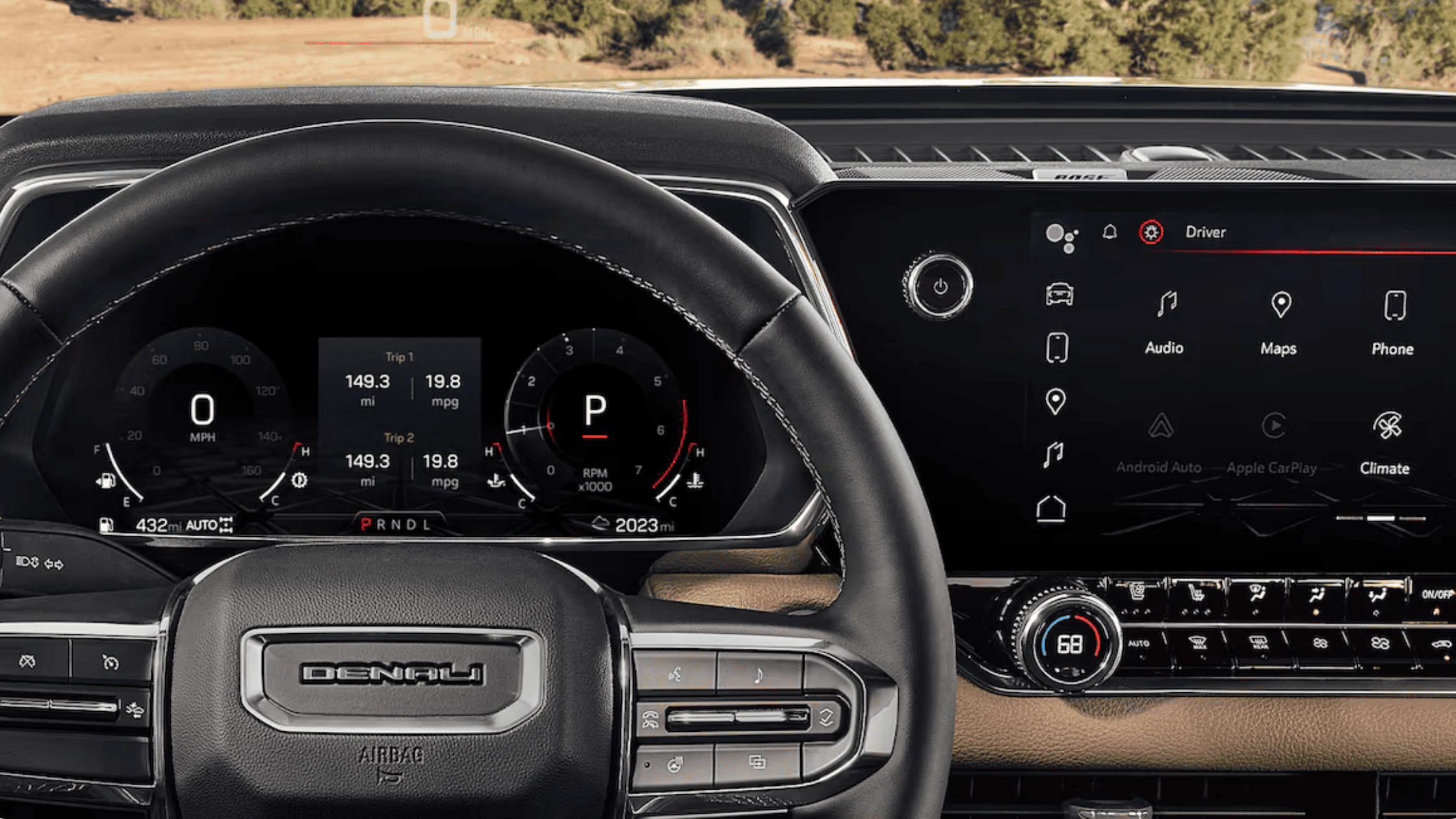
The 2026 GMC Canyon Denali incorporates an 11-inch digital infotainment display that functions as the central control interface for vehicle systems. This display integrates navigation, audio controls, and connectivity features into a unified platform. The screen layout is designed for clarity and ease of use, with touch-responsive controls and organized menu structures.
The infotainment system supports smartphone connectivity, allowing integration with compatible devices for communication and media access. The system processes input efficiently, ensuring that commands are executed without delay. This contributes to a streamlined user experience.
An available Bose® premium audio system is integrated into the cabin to deliver consistent sound quality. The system is engineered to distribute audio evenly across all seating positions. Acoustic tuning minimizes distortion and maintains clarity at different volume levels.
Digital instrumentation provides the driver with essential vehicle data, including speed, fuel consumption, and system status. This information is displayed in a format that allows for quick interpretation. The integration of digital systems supports efficient monitoring of vehicle performance.
Interior Layout and Cabin Engineering
The interior of the 2026 GMC Canyon Denali is configured to accommodate up to five occupants. The seating layout is designed to provide balanced space distribution, ensuring sufficient legroom and headroom for both front and rear passengers. Seat positioning is optimized for driver visibility and control access.
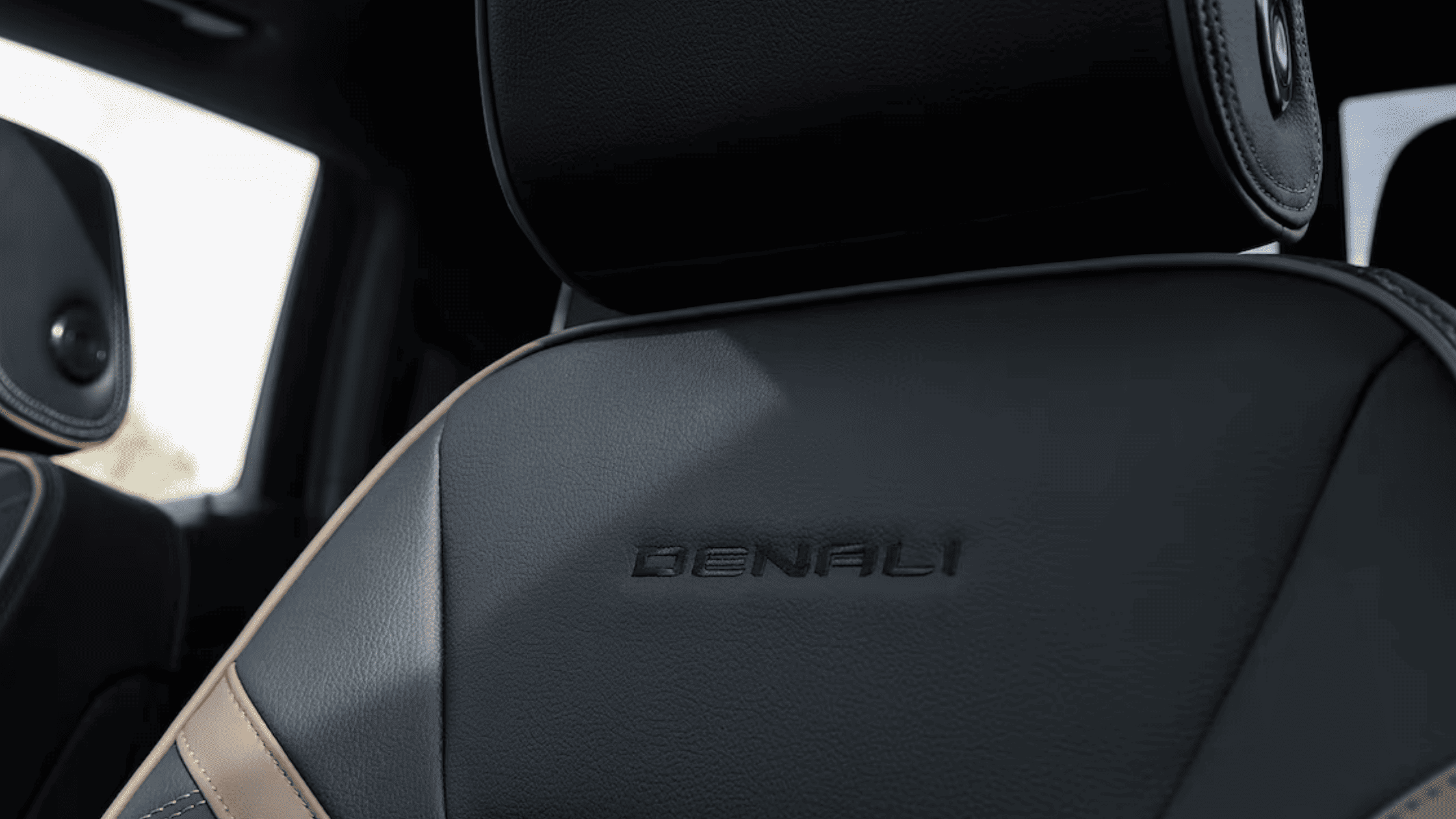
Materials used within the cabin are selected for durability and ease of maintenance. Surfaces are designed to resist wear and maintain structural integrity over time. The layout of controls is arranged to minimize driver distraction by placing frequently used functions within accessible reach.
Climate control systems regulate cabin temperature through a combination of ventilation and air distribution channels. These systems maintain consistent airflow and temperature levels throughout the interior. Acoustic insulation is integrated into the cabin structure to reduce external noise and improve occupant comfort.
Storage compartments are distributed throughout the cabin to provide functional space for personal items and equipment. These compartments are designed to accommodate different sizes and shapes, contributing to overall usability.
Turbocharged Powertrain and Transmission Calibration
The 2026 GMC Canyon Denali is equipped with a 2.7-liter inline four-cylinder TurboMax™ engine. This powertrain produces 310 horsepower and is engineered to deliver consistent torque across a wide operating range. The turbocharging system increases intake air pressure, which improves combustion efficiency and supports higher output compared to naturally aspirated engines of similar displacement.
The engine is paired with an 8-speed automatic transmission that manages gear selection based on throttle input, load conditions, and driving mode. This transmission provides closely spaced gear ratios that improve acceleration and maintain engine efficiency at highway speeds. The calibration of the transmission ensures smooth transitions between gears, reducing mechanical stress and maintaining stability during shifts.
Fuel efficiency is rated at approximately 19 miles per gallon in city driving conditions and 23 miles per gallon on highways, with a combined estimate of 20 miles per gallon. The fuel system is configured for regular unleaded gasoline, which simplifies refueling requirements. Engine management systems continuously adjust fuel delivery and ignition timing to maintain optimal efficiency under varying operating conditions.
Selectable drive modes modify throttle sensitivity, transmission response, and traction control settings. These modes allow the driver to adjust vehicle behavior based on terrain or load requirements. The system enhances control by optimizing power delivery for specific driving conditions.
Structural Framework and Suspension Engineering
The 2026 GMC Canyon Denali utilizes a reinforced midsize truck platform designed to support both load-bearing capacity and ride stability. The frame construction incorporates high-strength materials that improve rigidity and reduce flex under load. This structural integrity contributes to consistent handling characteristics during acceleration, braking, and cornering.
The suspension system is tuned to balance comfort and durability. It includes components that absorb road irregularities while maintaining tire contact with the surface. This setup supports improved traction and stability on uneven terrain. The suspension geometry is engineered to distribute weight evenly across the vehicle, which enhances control during both empty and loaded conditions.
An off-road-capable suspension configuration is integrated into the platform. This system allows for increased wheel articulation and improved shock absorption. The configuration supports traction in low-grip environments such as gravel or dirt surfaces. Ground clearance and approach angles are optimized to reduce the risk of underbody contact when navigating uneven terrain.
The 2026 GMC Canyon Denali includes a traction management system that adjusts torque distribution based on wheel slip and surface conditions. Sensors monitor wheel speed and vehicle dynamics, allowing the system to apply corrective measures when necessary.
Exterior Structure and Functional Design Elements
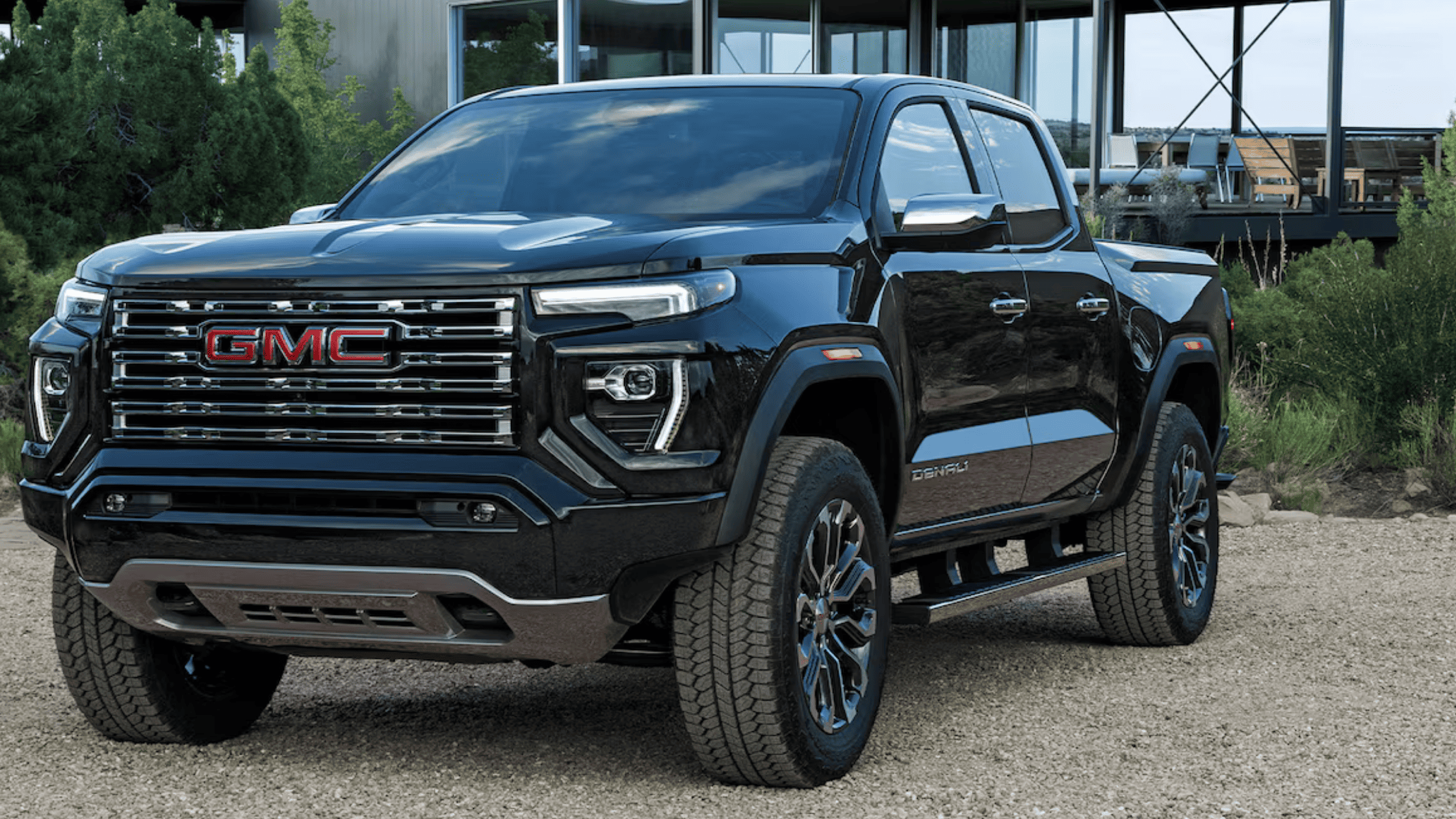
The exterior design of the 2026 GMC Canyon Denali focuses on durability, airflow management, and visibility. The body panels are constructed to resist deformation and maintain structural integrity over extended use. The front fascia incorporates a grille system that regulates airflow to the engine compartment. This design supports thermal management by ensuring consistent cooling under various operating conditions.
Lighting systems are positioned to maximize forward visibility and peripheral awareness. Headlamps are configured to provide a controlled beam pattern that improves illumination without causing excessive glare. Additional lighting elements enhance visibility in low-light environments.
The overall dimensions of the 2026 GMC Canyon Denali are optimized for maneuverability while maintaining interior space and cargo capacity. The midsize configuration allows for easier navigation in confined areas compared to full-size trucks. At the same time, the vehicle retains the structural strength required for utility applications.
The cargo bed is designed with a capacity of approximately 41.9 cubic feet. The bed structure supports various loading configurations and is constructed to withstand repeated use. Reinforced surfaces and tie-down points contribute to secure cargo management.
Safety Systems and Driver Assistance Technologies
The 2026 Canyon Denali includes a range of safety systems designed to assist with vehicle control and hazard detection. These systems use sensors and cameras to monitor the surrounding environment and provide feedback to the driver.
Driver assistance technologies support functions such as maintaining lane position and detecting potential collisions. These systems are programmed to provide alerts or apply corrective actions when necessary. The integration of these features enhances situational awareness and contributes to safer vehicle operation.
The structural design of the 2026 GMC Canyon Denali incorporates reinforced components that improve occupant protection during impact events. These components work in conjunction with restraint systems to reduce the effects of collisions. Safety systems are designed to support the driver but do not replace the need for attentive vehicle operation.
Efficiency Systems and Fuel Management
The 2026 GMC Canyon Denali’s efficiency is supported by the integration of a turbocharged engine and an electronically controlled transmission. The engine management system regulates fuel delivery based on operating conditions, ensuring consistent performance without excessive consumption.
Fuel efficiency ratings are estimated at 19 miles per gallon in city driving and 23 miles per gallon on highways. These figures are achieved through a combination of engine design, transmission calibration, and aerodynamic considerations. The use of regular unleaded gasoline simplifies operational requirements.
The vehicle’s size and configuration contribute to its efficiency by reducing overall weight compared to larger trucks. This allows the engine to operate within an optimal range for fuel consumption. The balance between power output and efficiency supports both daily driving and utility applications.
Integrated Systems and Vehicle Control Architecture
The 2026 GMC Canyon Denali utilizes an integrated control architecture that connects various vehicle systems. Electronic control units manage functions such as engine performance, transmission behavior, and safety features. These units process data from sensors located throughout the vehicle.
The coordination between systems allows for adjustments based on driving conditions. For example, the traction management system communicates with the powertrain to regulate torque distribution. This interaction ensures consistent performance across different environments.
The digital infrastructure supports continuous monitoring of vehicle status. Diagnostic information is displayed to the driver, allowing for awareness of system performance. This integration contributes to efficient operation and maintenance.