




2026 Chevrolet Blazer EV near Morganton, NC
The
2026 Chevrolet Blazer EV delivers a balanced combination of performance, design, and advanced technology through GM’s Ultium Platform. Designed as an electric midsize SUV, it provides strong acceleration, a broad driving range, and intelligent connectivity. Every element, from its battery system to its digital displays, is engineered to enhance efficiency, driving confidence and adaptability. The 2026 Chevrolet Blazer EV introduces multiple configurations and drivetrain options, allowing it to meet diverse driving needs without compromise in capability or function.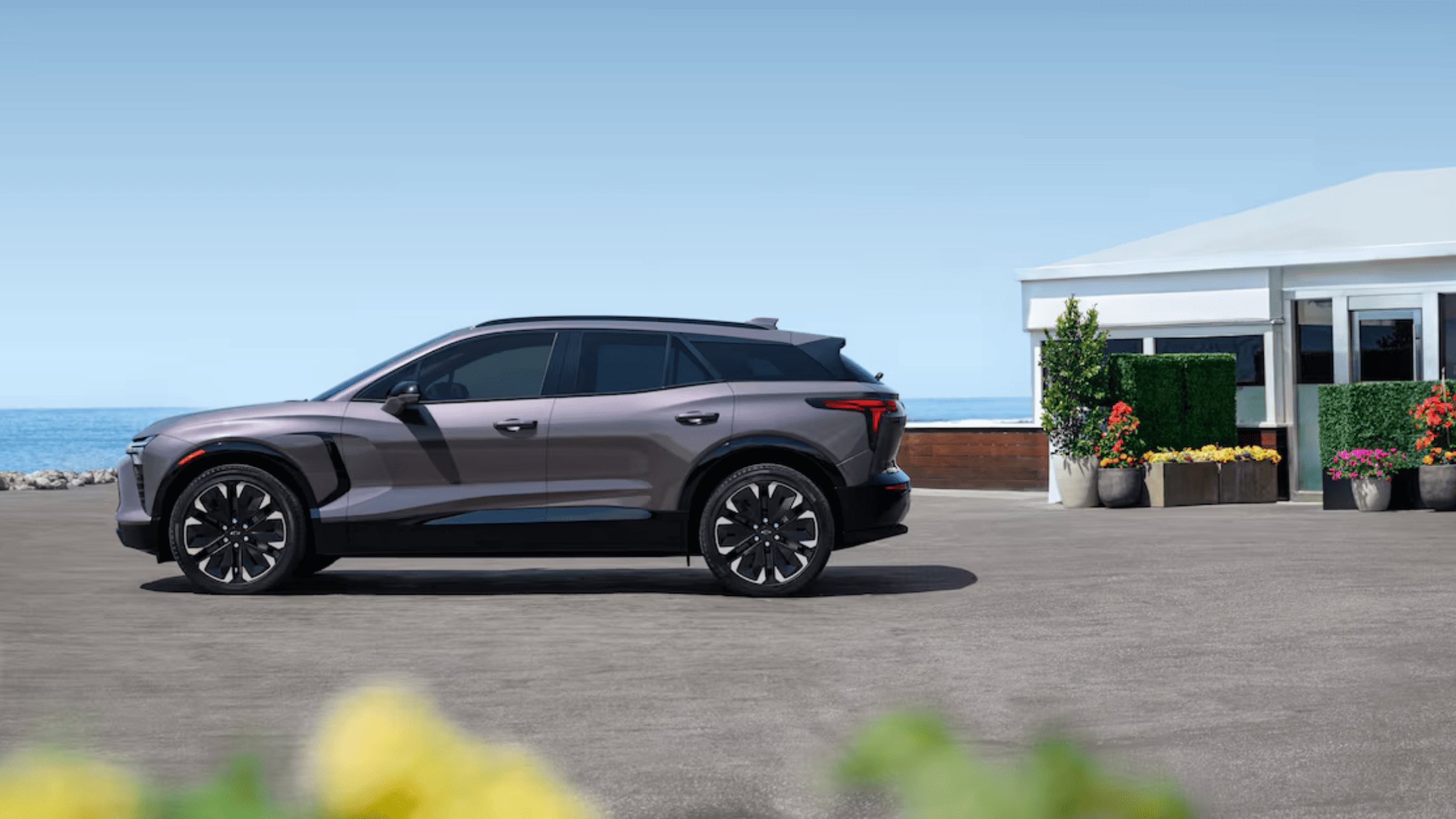
Cabin Configuration and Interior Technology
Inside the 2026 Chevrolet Blazer EV, the cabin layout emphasizes driver accessibility and functional technology. A 17.7-inch HD touchscreen display anchors the center console, complemented by an 11-inch driver information display positioned directly behind the steering wheel. These two digital panels create a continuous command interface that consolidates navigation, performance data, and infotainment.
The system integrates Google Built-In, including Google Maps, Google Assistant, and Google Play compatibility. Wireless Apple CarPlay® and Android Auto™ are also available for seamless smartphone connectivity. The flat cabin floor, made possible by the Ultium battery placement, enhances passenger legroom and provides additional cargo volume. The second-row seats fold to extend cargo capacity, supporting both daily commutes and long-distance travel.
Materials vary by trim, offering cloth, leather-appointed, or suede microfiber seating. Ambient interior lighting is customizable, while available heated and ventilated front seats maintain consistent comfort across all conditions. The overall design emphasizes efficiency, ergonomics, and visual clarity, ensuring all primary controls remain within easy reach.

Safety and Driver Assistance Engineering
Safety performance in the 2026 Chevrolet Blazer EV is driven by the integration of Chevrolet Safety Assist, a standard suite of six advanced driver assistance systems. This includes Forward Collision Alert, Automatic Emergency Braking, Front Pedestrian Braking, Lane Keep Assist with Lane Departure Warning, Following Distance Indicator, and IntelliBeam® automatic high beams. Each system functions through coordinated sensor and camera data to identify potential hazards and assist the driver in avoiding collisions.
Higher trims include enhanced driver support technologies such as HD Surround Vision and Rear Cross Traffic Braking. These systems improve awareness in low-visibility conditions and complex parking scenarios. The available Enhanced Park Assist automates steering and braking during parallel and perpendicular parking maneuvers.
The 2026 Chevrolet Blazer EV also incorporates Super Cruise®, a hands-free driver assistance system compatible with hundreds of thousands of miles of mapped highways. Using LiDAR map data, GPS, and adaptive sensors, it enables automatic lane centering and speed control while continuously monitoring driver engagement. The system adds a layer of convenience without compromising control.

Powertrain and Performance Configuration
The 2026 Chevrolet Blazer EV is powered by the Ultium battery architecture, which enables flexible drivetrain setups, including front-wheel drive, rear-wheel drive, and all-wheel drive. This versatility allows different trims to deliver optimized handling, traction, and acceleration based on driver preferences. The performance-oriented SS trim generates up to 615 horsepower and 650 lb-ft of torque, reaching 60 miles per hour in 3.4 seconds when using Wide Open Watts mode. This capability demonstrates the precision of the electric propulsion system and its ability to deliver immediate power without delay.
Each drivetrain configuration benefits from a single-speed transmission that ensures seamless torque transfer. The vehicle’s center of gravity is lower due to the placement of the Ultium battery pack within the chassis structure. This layout enhances cornering stability and overall balance, improving both performance and safety during acceleration and braking. The regenerative braking system of the 2026 Chevrolet Blazer EV provides variable levels of energy recovery, converting kinetic energy back into stored electrical energy while reducing brake wear. Drivers can adjust the intensity of regeneration for smooth deceleration or more aggressive energy capture depending on road conditions and preference.
Range and Charging Capabilities
Range efficiency remains one of the most critical aspects of any electric vehicle. The 2026 Chevrolet Blazer EV achieves an EPA-estimated range of up to 334 miles on select rear-wheel-drive models. This performance is supported by aerodynamic refinement and intelligent energy management software that regulates power distribution to maintain consistency and stability.
The SUV features an 11.5 kW onboard charger designed for Level 2 AC charging. For drivers who need faster energy replenishment, the system supports DC Fast Charging at rates up to 190 kW. Under ideal conditions, this allows approximately 78 miles of additional range within 10 minutes of charging. The Ultium Platform’s thermal management system maintains optimal battery temperature, ensuring consistent charge rates and improved long-term battery health.
Chevrolet also integrates charging optimization tools through the myChevrolet app, providing charge scheduling, route planning, and station availability monitoring. This digital support enhances overall efficiency and helps reduce downtime during travel.
Disclaimer: On a full charge. Actual range may vary based on several factors, including ambient temperature, terrain, battery age and condition, loading, and how you use and maintain your vehicle.
Exterior Structure and Design Integration
The 2026 Chevrolet Blazer EV features a body design that combines aerodynamic efficiency with structural strength. Its exterior utilizes smooth panel transitions and functional air curtains that reduce drag and improve airflow around the front fascia and wheel arches. Door handles are flush-mounted to further minimize wind resistance.
Each trim level includes distinct exterior treatments. The RS and SS variants display performance-oriented design elements such as a sport fascia, aggressive grille patterns, and lighting animations that activate during approach and departure. Lighting functions are fully LED-based, offering sharp visibility and reduced power draw.
Wheel options extend up to 22 inches on higher trims, contributing to improved traction and visual balance. The suspension system uses precision-tuned damping to maintain consistent ride comfort across varied driving environments. Overall, the design approach combines aerodynamic optimization with modern engineering principles that improve performance and range efficiency.
Structural Engineering and Battery Protection
The vehicle’s architecture is built around the Ultium Platform, which integrates the battery pack as part of the vehicle’s structural frame. This contributes to rigidity and safety by distributing impact forces during collisions. The battery enclosure is reinforced with cross members and protective shielding to reduce the risk of puncture.
Thermal control systems monitor individual battery cells to prevent overheating and maintain efficient operation under load. Combined with intelligent inverter systems, these components regulate energy flow for smooth power delivery and extended component life. The result is an electric SUV designed for high performance and endurance across its expected operational lifespan.
Energy Management and Connectivity Systems
The energy management software of the 2026 Chevrolet Blazer EV continuously evaluates power consumption, charging cycles, and regenerative output to maintain performance consistency. Through the myChevrolet mobile app, drivers can remotely monitor charge levels, locate nearby charging stations, and receive notifications on charge completion. The app’s route-planning function calculates the most efficient paths based on current battery range and available public chargers.
The charging port supports secure connection with both home and public charging units. For at-home use, Level 2 equipment can be installed for daily overnight charging. The vehicle automatically balances voltage input to maintain stable battery charging rates and prevent overcharging. This energy management design supports long-term dependability and helps preserve range accuracy over time.
Trim Lineup and Mechanical Variation
Three main trims define the 2026 Chevrolet Blazer EV lineup: LT, RS, and SS. Each provides specific drivetrain options and performance configurations. The LT trim features standard front-wheel drive and practical equipment for daily operation. The RS variant offers both rear-wheel and all-wheel drive, introducing performance styling elements and extended driving range. The SS trim functions as the high-output model, equipped with a dual-motor configuration and sport-tuned chassis calibration.
All trims share structural integrity, Ultium-based propulsion, and advanced digital functionality. This tiered structure ensures buyers can select configurations tailored to energy efficiency, power preference, or enhanced handling.
Schedule a Test Ride near Morganton, NC
Drivers seeking to experience the capabilities of the 2026 Chevrolet Blazer EV can schedule a test drive at Elevation Chevrolet GMC near Morganton, NC. Experiencing the instant torque response, digital control systems, and active safety features firsthand provides a clear understanding of its engineering quality. A test drive also offers the opportunity to explore the customizable digital displays, examine the Ultium battery performance in motion, and feel the stability produced by the low center of gravity. Our dealership staff can assist in explaining each technical system in detail, from charging compatibility to Super Cruise® operation. Schedule your visit today to explore the precision and engineering focus behind the all-electric performance of the 2026 Chevrolet Blazer EV.